Shape Hunt Bar Chart
✨ Your tally marks turn into a chart that tells the story of a whole room at a single glance.
🧰 You need
- paper
- a pencil
- a ruler
- a room or street to observe
- squared paper if you have it
⚠️ Stay on the pavement and with an adult if you are counting outdoors.
👀 What you will see
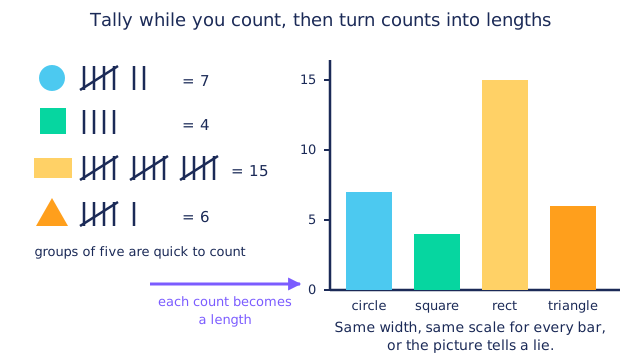
Tally marks in groups of five are much quicker to count than a long row of ones. Rectangles usually win indoors because of doors, windows and screens. The finished bars make the biggest and smallest groups obvious without counting anything again.
🧪 Do it
- Choose four shapes to hunt: circle, square, rectangle and triangle.
- Walk around for ten minutes and make one tally mark for each shape you spot.
- Group your tally marks in fives and count each total.
- Draw two lines for the axes and mark equal steps up the side.
- Draw one bar per shape, all the same width, using the same scale.
- Write one sentence about which shape won and which was rarest.
💡 Why it happens
A tally is a way of recording while you count, so you never lose your place. A bar chart turns each count into a length, and lengths are easy for eyes to compare, which is why charts beat lists of numbers. Every bar must use the same scale, meaning the same number of units for each square, or the picture will tell a lie. Choosing what to count, and what to leave out, is a decision you should write down beside your chart.
🔁 Now try this
Repeat the same ten-minute count in a different room and draw both charts side by side to compare them.
🤔 Think about it
Which shape did you expect to win, and what does the result tell you about how things are built?
🧘 Ask the Acharya
“Which shape did you expect to win, and what does the result tell you about how things are built?” — ask him and he will explain it from your own chapters.
More for Std 3–5
The Egg That Lost Its Shell
After two days the shell has vanished and a bare, bouncy, see-through egg is sitting in the jar.
Try it →Science20 minBalloon Rocket
Let go of the balloon and it flies the whole length of the room along a string, like a tiny rocket.
Try it →Science20 minLiquid That Fights Back
Your finger sinks in slowly like honey, but a fast punch lands on it as if it were a solid floor.
Try it →