
 Chart of Intelligence & Memory
Why we forget, how memory is really built, and the techniques of memory champions — Harry Lorayne's linking method, the memory palace, chunking and spaced repetition — made simple for school.
Start reading ↓ 🧘 Ask Guru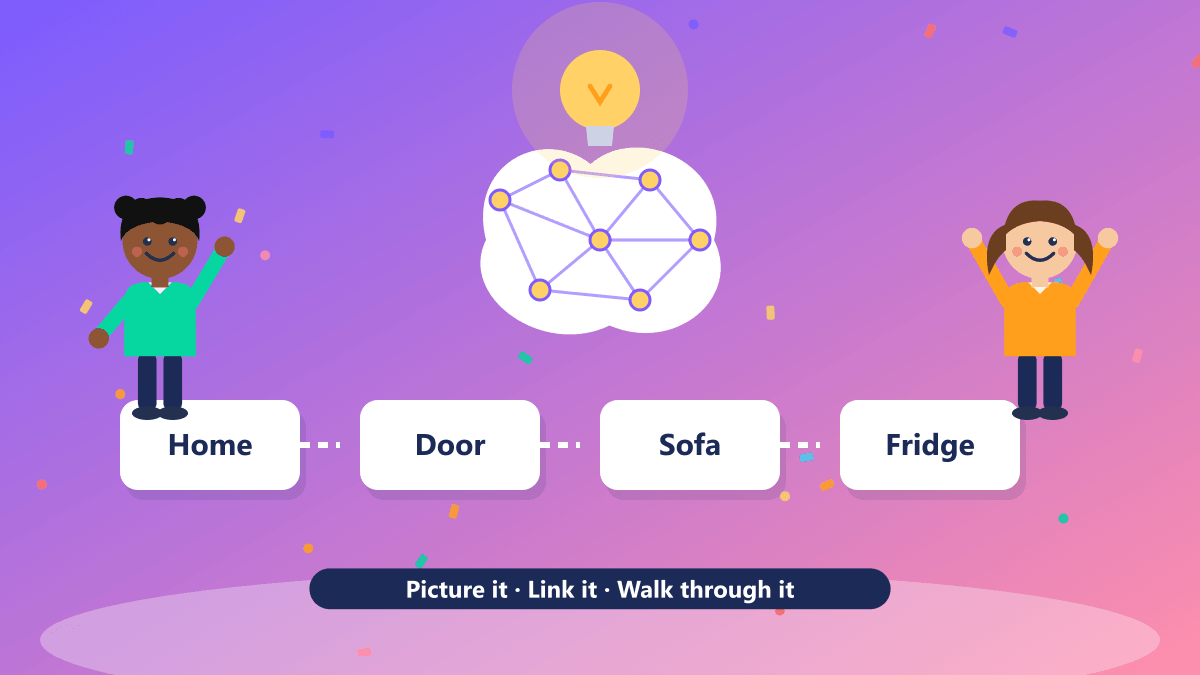
You do not have a "bad memory". You have an untrained one. Memory champions who memorise a shuffled deck of cards in under a minute all say the same thing: they were ordinary until they learned the techniques. Those techniques are on this page.
Memory is not a hard disk. It is a network of connections that gets stronger each time it is used and weaker each day it is not.
Everything you see and hear, for under a second. Almost all of it is thrown away — unless you pay attention.
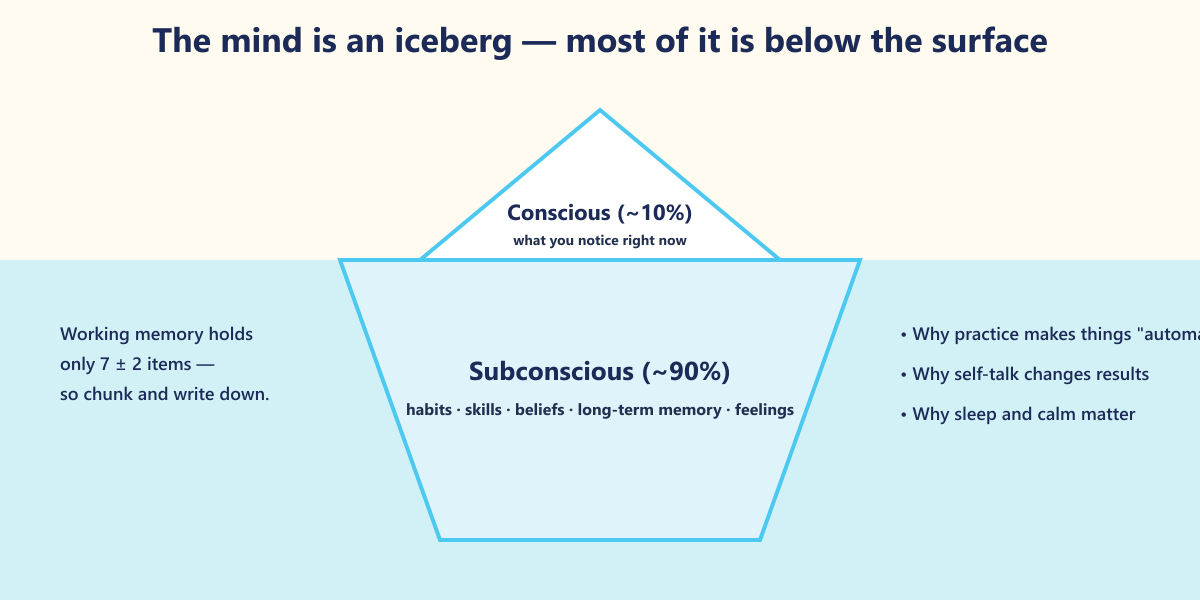
The "desk" of the mind. Holds only about 7 ± 2 items for 20–30 seconds. This is why long formulas feel impossible until you chunk them.
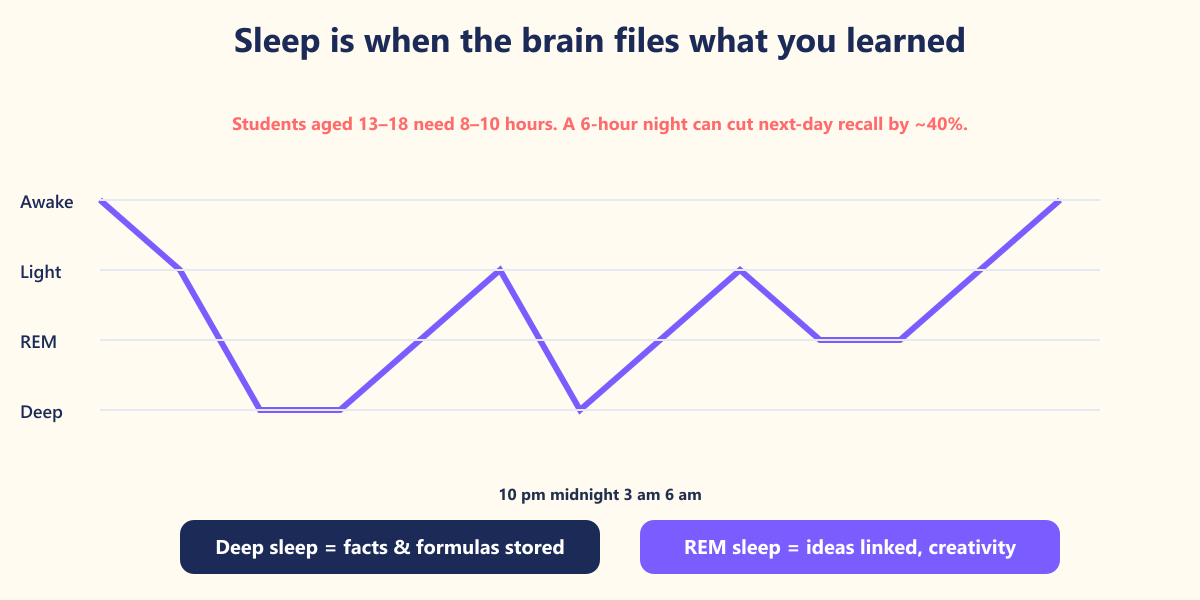
Practically unlimited. Information moves here through repetition, meaning and sleep. Every technique on this page is a way to move things from desk to library.
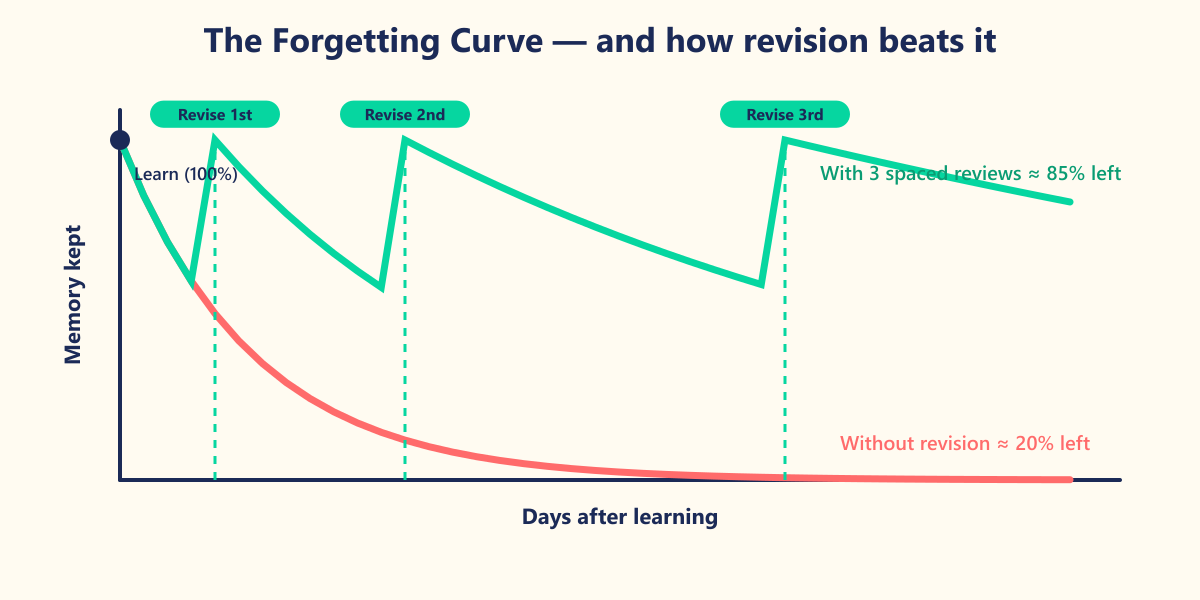
In 1885 Hermann Ebbinghaus measured his own forgetting and found the curve every student knows: without review, about 70% of new material is gone within a day.
Harry Lorayne, the world's most famous memory trainer, taught one rule: you cannot remember what you did not notice, and you remember best what you can picture. His Link method turns any list into a story of pictures.
Used by Greek orators 2,500 years ago and by every modern memory champion: put pictures in places you already know perfectly — the rooms of your home.
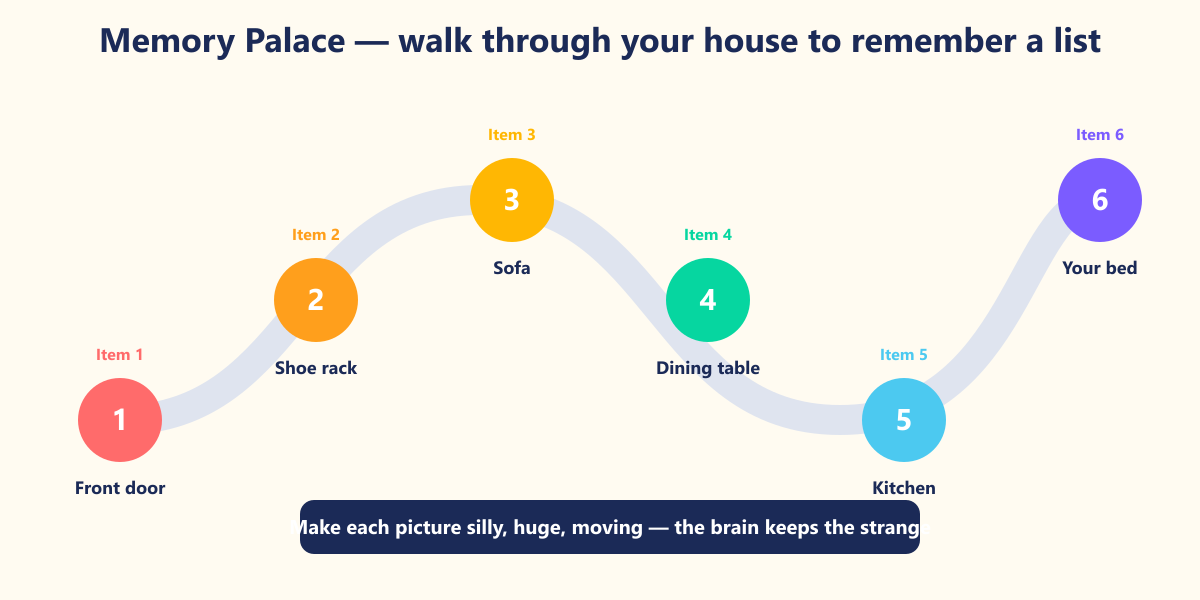
One palace per subject works well: history in your home, biology in the school corridor, chemistry in your grandparents' house. A palace can be reused after a few weeks once the old images have faded.
Working memory holds 7 ± 2 chunks — not items. A chunk can be one letter or a whole phrase, if the pieces are grouped by meaning.
9820456789 is impossible; 98204-56789 is two chunks. Dates, constants and phone numbers: always split.
VIBGYOR for the spectrum. "King Philip Came Over For Good Soup" for Kingdom-Phylum-Class-Order-Family-Genus-Species. Make your own — self-made ones are remembered better.
The brain stores songs in a different, sturdier pathway. Sing formulas to a film tune. Tables of 7 to a clapping beat. It feels childish; it works at any age.
Point in the air as you say the steps of a process. Motor memory is added to verbal memory — two routes to the same fact.
One hour split into four 15-minute reviews across two weeks beats one hour in a single sitting — every time, in every study. This is the most powerful and least used technique in school.
| Review | When | How (5–15 min) |
|---|---|---|
| 1 | Same evening | Blank-page recall, then check against notes |
| 2 | Next morning | Read the blank page from last night; fix errors |
| 3 | Day 3 | Flash cards / mind map from memory |
| 4 | Day 7 | Solve 5 exam questions on the chapter, timed |
| 5 | Day 21 | Teach it to someone in 5 minutes |
| 6 | Before the exam | One-page mind map only — you already know it |
Books and guides from the Star Student Library for this topic — tap Read to open one here, or Download to keep the PDF.
Chart of Intelligence & Memory
 Super Power Memory
 How to Develop a Super-Power Memory
 How to Develop a Super-Power Memory
 Page A Minute Memory
 Use Your Memory
 Learning and Memory: The Brain in Action
 Brain Facts: A Primer on the Brain and Nervous System
 How to Improve Memory: The Ultimate Mind Power Manual
A topic you cannot crack, a definition, a full-marks answer, a question about life — Acharya Samayeshwar explains it aloud and in writing, for your board and Std.
 Ask GuruAcharya Samayeshwar